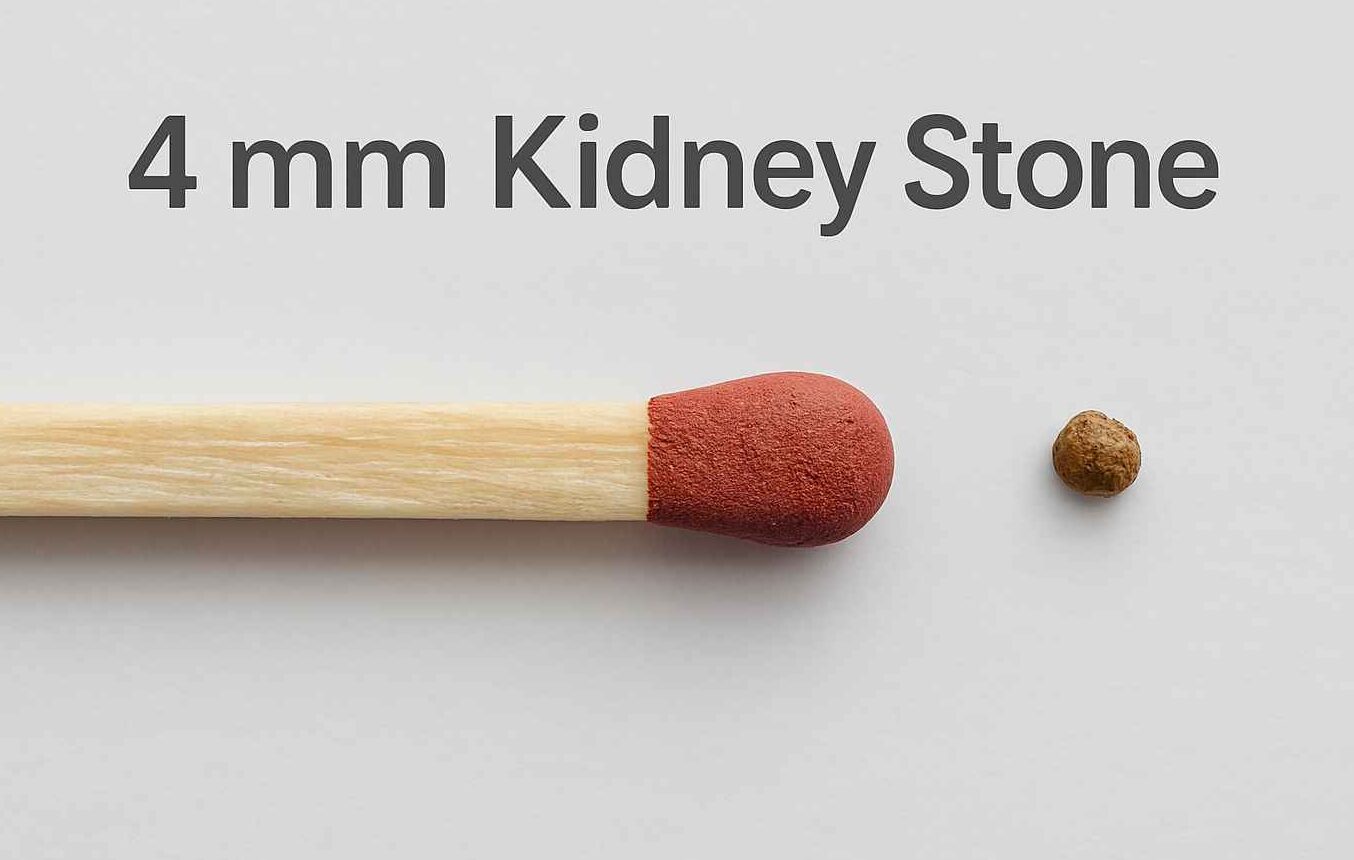
Kidney stones can vary in size, and their management depends largely on their dimensions. A 4 mm kidney stone, while small, may or may not pass naturally and might require medical assistance.
Kidney stone size in mm is a key factor in determining treatment.
A 4 mm stone is about the size of a matchstick tip. It is larger than grains of sand (2 mm or 3 mm).
It falls within the kidney stone size chart in mm. According to treatment guidelines, it is a borderline case. It is often passable but sometimes problematic.
Can a 4 mm Kidney Stone Pass Naturally?
Many stones in the kidney stone size range of 1–4 mm can pass with conservative management, but several factors influence this:
May pass naturally with hydration, especially if:
The stone is in the lower part of the ureter
The patient has good fluid intake
There are no anatomical obstructions
Doctors often prescribe:
Increased water intake (2.5–3L/day)
Alpha-blockers to relax ureter muscles
Pain medications for symptom relief
While a 4 mm stone may pass, monitoring is essential to avoid complications like obstruction or infection.
Treatment Options for a 4 mm Kidney Stone
If the stone causes ongoing symptoms or doesn’t pass in a few weeks, medical intervention might be needed. Treatments include:
1. Medical Expulsive Therapy (MET)
Uses alpha-blockers like Tamsulosin
Reduces ureteral spasms
Increases the chance of stone passage
2. Extracorporeal Shock Wave Lithotripsy (ESWL)
Non-invasive and suitable for lithotripsy stone size between 4 mm to 20 mm
Uses shock waves to break stones into smaller, passable fragments
3. Ureteroscopy (if required)
A thin scope inserted through the urethra to remove or break the stone
Generally avoided for 4 mm stones unless other complications arise
4 mm Stone vs. Other Common Sizes
Kidney Stone Size
Common Comparison
Passable?
Likely Treatment
2 mm
Sand grain
Usually passes
Hydration
3 mm
Slightly larger sand grain
Often passes
Hydration, MET
4 mm
Matchstick tip
May pass with support
Hydration, MET, ESWL (if needed)
5 mm
Slightly bigger than 4 mm
May not pass easily
Often requires ESWL or ureteroscopy
What Is the Normal Size of Kidney Stone?
Normal kidney stone size in mm for natural passage: 1–4 mm
Small kidney size causes: Congenital defects, chronic kidney disease, or reduced blood flow.
Kidney size increase: Often due to swelling, hydronephrosis, or blockage by stones.
How to reduce the size of kidney stones:
Drink plenty of water
Avoid high-oxalate foods (e.g., spinach, nuts)
Limit salt and sugar
Follow prescribed medications
Final Takeaway
A 4 mm kidney stone is small, but not without risks. The stone might pass naturally with hydration. However, if it causes symptoms or lingers, treatment like MET or ESWL may be necessary. Regular follow-up and imaging are crucial.
Disclaimer: This blog is for informational purposes only. Always consult a certified urologist or healthcare professional for personalized diagnosis and treatment. Do not self-medicate or ignore persistent symptoms.