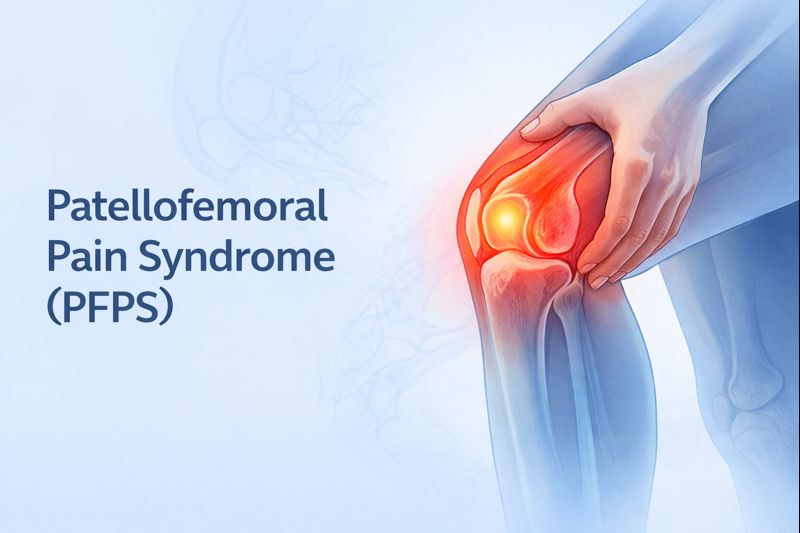
Patellofemoral Pain Syndrome (PFPS) is a common knee condition that causes pain around or behind the kneecap (patella). It is often referred to as runner’s knee and typically worsens during activities such as climbing stairs, squatting, running, or sitting for long periods.
In simple terms, PFPS occurs when the kneecap does not move smoothly over the thigh bone (femur), leading to irritation of the surrounding structures.
Where Does Patellofemoral Pain Syndrome Hurt?
Patients commonly describe:
- Pain behind or around the kneecap
- Discomfort in the front of the knee (anterior patellofemoral pain syndrome)
- Pain while sitting with bent knees (“theatre sign”)
- Knee pain patellofemoral syndrome during stairs or slopes
You may also notice clicking, crepitus, or a grinding sensation during movement.
Patellofemoral Pain Syndrome Symptoms
The most common patellofemoral pain syndrome symptoms include:
- Dull or aching knee pain
- Pain while climbing stairs or squatting
- Pain during running or cycling
- Knee stiffness after prolonged sitting
- Swelling around the kneecap
- Clicking or popping sounds
- Pain in one knee (left patellofemoral pain syndrome or right patellofemoral pain syndrome) or both knees (bilateral patellofemoral pain syndrome)
Symptoms may be acute or chronic, depending on activity level and biomechanics.
What Causes Patellofemoral Pain Syndrome?
Understanding what causes patellofemoral pain syndrome is crucial for proper treatment.
Common Patellofemoral Pain Syndrome Causes
- Overuse from running, jumping, or repetitive knee loading
- Muscle imbalance (weak quadriceps or hip muscles)
- Poor kneecap tracking
- Flat feet or overpronation (can flat feet cause patellofemoral pain syndrome? Yes)
- Increased Q-angle
- Sudden increase in training intensity
- Improper footwear
- Previous knee injury or surgery
PFPS can also be associated with chondromalacia patella, though they are not always the same condition.
Patellofemoral Pain Syndrome vs Patellar Tendonitis
Many patients confuse patellar tendonitis vs patellofemoral pain syndrome.
| Feature | PFPS | Patellar Tendonitis |
|---|---|---|
| Pain location | Around/behind kneecap | Below kneecap |
| Cause | Maltracking, overuse | Tendon overloading |
| Pain type | Diffuse ache | Sharp, localized |
Accurate diagnosis is essential because treatments differ.
How Is Patellofemoral Pain Syndrome Diagnosed?
Diagnosis is mainly clinical.
Patellofemoral Pain Syndrome Test & Exam
- Physical exam and gait assessment
- Special tests for patellofemoral pain syndrome
- Assessment of hip and quadriceps strength
- Patellar tracking evaluation
Imaging
- X-ray patellofemoral pain syndrome: rules out arthritis or fractures
- MRI patellofemoral pain syndrome: used if pain persists
- Diagnosis coding: ICD 10 code for patellofemoral pain syndrome (commonly M22.2X)
Patellofemoral Pain Syndrome Treatments
Conservative Treatment for Patellofemoral Pain Syndrome
Most patients improve without surgery.
1. Physical Therapy for Patellofemoral Pain Syndrome
Targeted patellofemoral pain syndrome physical therapy focuses on:
- Quadriceps strengthening
- Hip and glute strengthening
- Core stability
- Gait retraining
2. Patellofemoral Pain Syndrome Exercises
Evidence-based exercises include:
- Straight leg raises
- Clamshells
- Wall sits
- Step-downs
- Hamstring and calf stretches
A patellofemoral pain syndrome exercises PDF or exercise handout is often provided by therapists.
Exercises for Patellofemoral Pain Syndrome to Avoid
- Deep squats
- Lunges with poor form
- Jumping or plyometrics during pain flare
- Running downhill early in recovery
Patellofemoral Pain Syndrome Stretches
Effective patellofemoral pain syndrome stretching includes:
- Quadriceps stretch
- Hamstring stretch
- IT band stretch
- Hip flexor stretch
These improve flexibility and reduce kneecap stress.
Knee Brace for Patellofemoral Pain Syndrome
Many patients ask does a knee brace help with patellofemoral pain syndrome?
Yes, when used correctly.
Best Knee Brace for Patellofemoral Pain Syndrome
- Patellar tracking braces
- Knee support with lateral stabilization
- Lightweight knee sleeves for mild cases
A knee brace for patellofemoral pain syndrome helps reduce pain during activity but should not replace therapy.
Patellofemoral Pain Syndrome Taping
Kinesio taping for patellofemoral pain syndrome or KT tape for patellofemoral pain syndrome can:
- Improve kneecap alignment
- Reduce pain during movement
- Enhance muscle activation
Proper technique matters—incorrect taping may worsen symptoms.
Patellofemoral Pain Syndrome Self-Care at Home
How to Treat Patellofemoral Pain Syndrome at Home
- Activity modification
- Ice packs after exercise
- NSAIDs (if advised by a doctor)
- Proper footwear or insoles
- Avoid prolonged sitting with bent knees
These patellofemoral pain syndrome self-care measures complement formal treatment.
Can You Exercise or Run with Patellofemoral Pain Syndrome?
- Can you exercise with patellofemoral pain syndrome? Yes, with guided low-impact exercises.
- Can you run with patellofemoral pain syndrome? Only after pain reduces and biomechanics improve.
- Cycling and swimming are often safer alternatives.
Patellofemoral Pain Syndrome Recovery Time
How long does patellofemoral pain syndrome last?
- Mild cases: 6–8 weeks
- Moderate cases: 3–6 months
- Chronic cases may take longer
Patellofemoral pain syndrome recovery time depends on consistency with therapy and addressing underlying causes.
Patellofemoral Pain Syndrome Surgery
Patellofemoral pain syndrome surgery is rarely required and considered only when:
- Conservative treatment fails after 6–12 months
- Structural abnormalities exist
Surgical options may include lateral release or realignment procedures.
Can Patellofemoral Pain Syndrome Be Cured?
Many patients ask:
- Is patellofemoral pain syndrome curable?
- Can patellofemoral pain syndrome be permanent?
With early diagnosis and proper rehab, most cases fully resolve. Chronic pain usually results from delayed or inadequate treatment.
Prevention of Patellofemoral Pain Syndrome
- Gradual training progression
- Strengthening hips and quads
- Wearing proper shoes
- Maintaining healthy body weight
- Correct running form
FAQs About Patellofemoral Pain Syndrome
1. How to fix patellofemoral pain syndrome permanently?
By correcting muscle imbalances, following a structured rehab program, and modifying activities.
2. Is walking good for patellofemoral pain syndrome?
Yes, walking on flat surfaces is generally safe and beneficial.
3. What kind of knee brace for patellofemoral pain syndrome is best?
A patellar stabilization brace or knee support recommended by a physiotherapist.
4. Can patellofemoral syndrome cause hip or back pain?
Yes, altered movement patterns can strain hips and lower back.
5. When should I see a doctor for patellofemoral pain syndrome?
If pain persists beyond a few weeks or interferes with daily activities, consult an orthopedic or sports medicine specialist.
Disclaimer
This article is for informational purposes only and does not replace professional medical advice. Diagnosis and treatment of patellofemoral pain syndrome should be guided by a qualified healthcare professional based on individual clinical evaluation.


