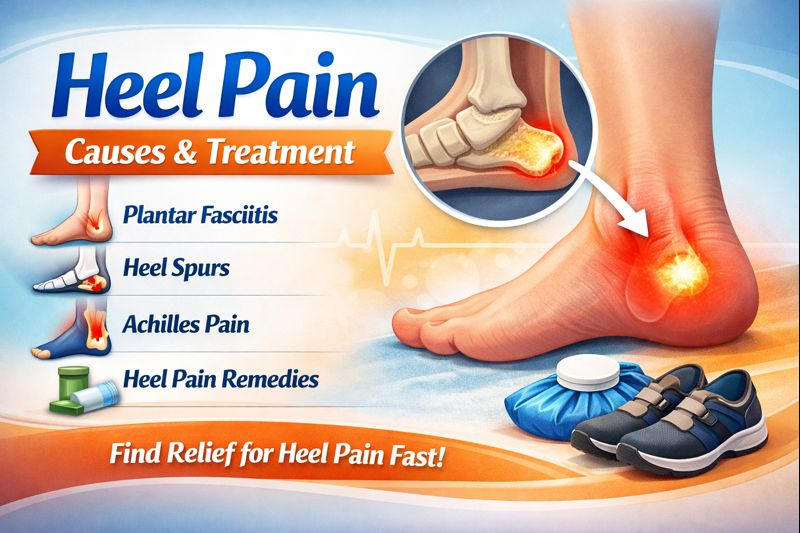
Heel pain is one of the most common foot complaints affecting people of all ages. Whether it is heel pain when walking, a sharp pain in the heel of the foot, or burning heel pain in the morning, discomfort in the heel can significantly impact daily activities. The pain may develop gradually or appear as sudden heel pain without injury, and its intensity can range from mild soreness to severe, stabbing pain.
Understanding what causes heel pain, how it presents, and the best ways to manage it is essential for long-term relief and preventing recurrence.
What Is Heel Pain?
Heel pain refers to discomfort felt at the bottom of the heel, back of the heel, or the inner or outer side of the heel bone (calcaneus). It may occur in one foot or both feet and can worsen during activities such as walking, running, or standing for long periods.
Common descriptions include:
- Pain in heel of foot when walking
- Sharp heel pain after getting out of bed
- Pain behind heel or back of ankle above heel
- Heel and arch pain
- Pain in the bottom of my heel
What Causes Heel Pain?
There are multiple causes of heel pain, depending on the location and nature of the discomfort.
1. Plantar Fasciitis Heel Pain

The most common reason for heel pain bottom of foot, plantar fasciitis occurs due to inflammation of the plantar fascia ligament. It often causes heel pain in the morning or after long periods of rest.
2. Heel Spur Pain (Calcaneal Spurs)

Heel pain calcaneal spurs develop when calcium deposits form on the heel bone. This can lead to heel bone spur pain and discomfort while walking or standing.
3. Achilles Heel Pain

Pain at the back of heel pain when walking may indicate Achilles tendon inflammation. Achilles tendon pain in heel is common among runners and athletes.
4. Heel Pad Syndrome

Damage or thinning of the heel’s natural fat pad can cause pain on bottom heel, especially on hard surfaces.
5. Overuse & Sports Injuries

Activities like jogging can lead to heel pain after running, painful heel from running, or rear heel pain.
6. Nerve Compression
Nerve irritation may result in burning heel pain, tingling, or shooting sensations.
7. Gout & Inflammatory Conditions
Heel pain gout or heel pain in the morning due to uric acid buildup can cause sudden, intense pain.
8. Cracked Heels & Skin Conditions
Deep cracks may cause pain from cracked heels or painful split heel, especially when walking.
Is Heel Pain a Sign of Cancer?
Many patients ask, “Is heel pain a sign of cancer?”
In most cases, heel pain is not cancer-related. However, persistent pain that does not improve with treatment, is associated with swelling, unexplained weight loss, or night pain should be evaluated. So while heel pain is rarely a sign of cancer, medical assessment is advised if symptoms are unusual or worsening.
Symptoms of Heel Pain
Common symptoms include:
- Sharp pain in heel when walking
- Pain in back of heel
- Pain in heel after sleeping
- Stabbing pain in heel
- Pain on inner side of heel
- Pain behind heel after running
- Heel pain and burning sensation
Heel Pain Treatment Options
Effective heel pain treatment depends on the cause and severity.
Conservative Treatments
- Rest and activity modification
- Ice therapy for pain relief
- Stretching exercises for heel pain
- Heel pads for heel pain
- Best insoles for heel pain
Footwear Support
Wearing heel pain support shoes, supportive shoes for heel pain, or best shoes for heel pain and walking all day helps reduce pressure and strain. Cushioned soles and proper arch support are essential.
Physical Therapy
Targeted heel exercises for heel pain improve flexibility and strength, especially for plantar fasciitis and Achilles pain.
Medical Treatments
- Anti-inflammatory medications
- Corticosteroid injections (if required)
- Shockwave therapy for chronic cases
How to Cure Heel Pain Fast at Home
If you’re wondering how to get rid of heel pain, these heel pain remedies may help:
- Ice packs for 15–20 minutes
- Calf and heel stretches
- Avoid walking barefoot
- Use heel cushions for heel pain
- Maintain healthy body weight
For many, heel pain relief begins within weeks when these measures are followed consistently.
Best Shoes & Inserts for Heel Pain
Choosing the right footwear plays a major role in recovery:
- Best shoes for plantar fasciitis heel pain
- Sneakers for heel pain with arch support
- Best heel inserts for heel pain
- Shoe insoles for heel pain
- Heel cups for cushioning and shock absorption
Heel Pain ICD-10 Codes (For Medical Reference)
- Right heel pain ICD-10: M79.671
- Left heel pain ICD-10: M79.672
These codes are commonly used for diagnosis and insurance documentation.
When Should You Be Concerned About Heel Pain?
Seek medical attention if you experience:
- Severe heel pain that limits walking
- Pain in the heel that lasts more than 2–3 weeks
- Swelling, redness, or fever
- Pain in the heel of one foot with no clear cause
FAQs on Heel Pain
1. Why does my heel pain when I walk?
Pain in my heel when I walk is commonly caused by plantar fasciitis, heel spurs, or Achilles tendon strain.
2. What is the best treatment for heel pain?
The best heel pain treatment includes rest, stretching, proper footwear, and supportive inserts.
3. Can heel pain go away on its own?
Mild heel pain may improve with home care, but persistent pain requires medical evaluation.
4. Are heel spurs always painful?
Not always. Some heel spurs cause no symptoms, while others result in significant heel spur pain.
5. What helps heel pain the fastest?
Ice therapy, stretching, heel pads, and wearing proper shoes help relieve heel pain quickly.
Disclaimer
This content is for informational purposes only and does not replace professional medical advice. If you experience persistent, severe, or worsening heel pain, consult a qualified orthopedic or foot specialist for accurate diagnosis and treatment.


