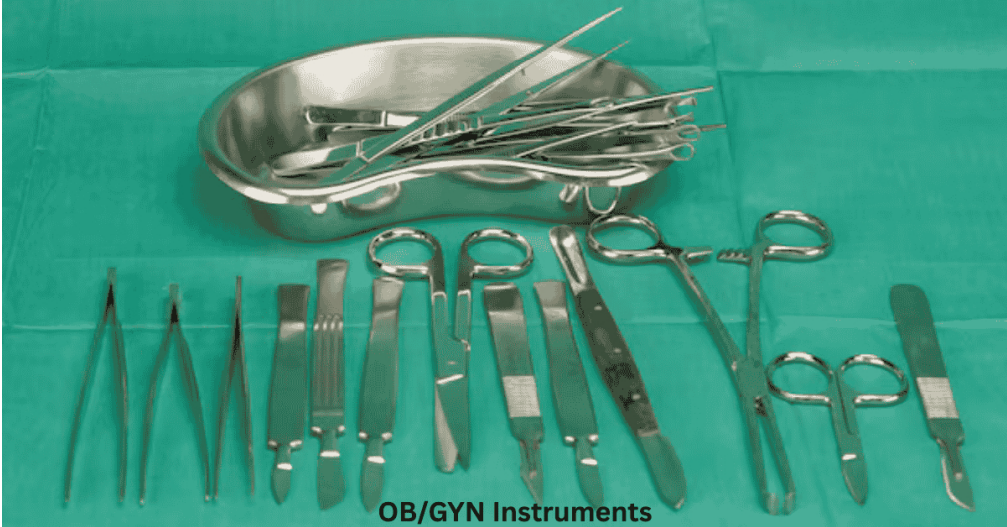
High-quality care in gynecology and obstetrics depends on precision, safety, and reliable tools. OB/GYN surgical Instruments are essential for accurate diagnoses, safe procedures, and better patient outcomes. They are used in routine exams and complex surgeries.
With the right instruments, healthcare professionals can deliver care efficiently and confidently. Knowing how these instruments function and their impact on patients is crucial. It also helps in selecting the right tools for every procedure. Surgeons, surgical teams, and hospital administrators all benefit from understanding these gynecological instruments.
Why are Specialized OB/GYN Instruments Important?
Specialized OB/GYN instruments improve patient care. They increase accuracy and allow surgeons to carefully work with delicate tissues. They are safer and do not pose a high risk during complex gynecological procedures.
Patients will benefit from the fast post-recovery that comes with smooth, non-traumatic procedures. Surgeons will also experience reduced fatigue during prolonged surgeries. Because these tools are specific to obstetrics and gynecology, general surgical tools cannot be used as substitutes.
Women’s postoperative health depends on these instruments in many ways. Each OB/GYN instrument type is intended for its specific purpose. Knowing the different kinds shows how surgeons work efficiently and safely.
Let’s now consider the principal categories of OB/GYN instruments.
Categories of OB/GYN Instruments
OB/GYN instruments are divided by use. The list of gynecologic instruments includes tools for examinations and minor procedures. Obstetric surgery tools names cover instruments used during labor and delivery.
These instruments help make care safer and easier for both patients and surgeons. Here are the most prominent categories/ types of OB/GYN surgical instruments:
1: Gynecology Cervical Biopsy Forceps
Gynecology Cervical Biopsy Forceps are used during gynecological procedures to carefully grasp and remove tissue from the cervix. This tissue is then examined to detect any abnormalities or signs of disease.
Gynecology Cervical Biospy Forceps include:
- Cervical Biopsy Forceps
- Uterine Biopsy Forceps
- Biospy Punch Forceps
- And others
2: Gynecological Hysterectomy Forceps
Gynecological Hysterectomy Forceps are very suitable for grasping and managing the heavy tissues. They are used during a hysterectomy to firmly grip the tough ligaments. This not only aids the surgeon in working safely but also ensures that the whole procedure is precise.
Gynecological Hysterectomy Forceps include:
- Heaney Hysterectomy Forceps
- Pean Hysterectomy Forceps
- Wertheim Vaginal Forceps
- And others
3: Gynecological Miscellaneous Obstetric Instruments
Gynecological Miscellaneous Obstetric Instruments are designed to support healthcare professionals during vaginal deliveries. They help in carefully holding, guiding, or extracting tissues when needed.
Gynecological Miscellaneous Obstetric Instruments include:
- Billroth Tumor Forceps
- Winter Placenta Forceps
- Umbilical Cord Scissors
4: Gynecological Obstetrical Forceps
Gynecological Obstetrical Forceps are used to make vaginal delivery easier. They help in rotating the head of the fetus during childbirth.
Gynecological Obstetrical Forceps include:
- Simpson Obstetrical Forceps
- Delee Obstetrical Forceps
- Elliot Obstetrical Forceps
- And others
5: Gynecology Scissors
Gynecology scissors are used to dissect soft tissues during gynecological procedures. These scissors provide a smooth and precise cutting action.
Gynecology Scissors include:
- Braun Episiotomy Scissors
- Kelly Uterine Scissors
- Busch Umbilical Scissors
- And others
6: Gynecology Vaginal Retractors
Gynecology Vaginal Retractors are used to retract tissues in order to give a better view of the surgical site. They guarantee atraumatic application and do not harm the surrounding tissues.
Gynecology Vaginal Retractors include:
- Doyen Vaginal Retractor
- Sims Vaginal Retractor
- Jackson Vaginal Retractor
- And others
Knowing these categories helps medical teams select the appropriate instruments for each procedure. It ensures efficiency, precision, and safety in every step.
How to Select the Right OB/GYN Instruments?
The selection of instruments is not a ‘tick-box’ exercise. Matching the instrument to the procedure, the patient, and the surgeon’s technique is essential. Minor investigations require many fewer instruments when compared to procedures such as hysterectomy or LSCS (Lower Segment Cesarean Section).
Patient-specific conditions, like age, anatomy, or previous surgeries, also play a great role in instrument choice. Good quality, ergonomic tools improve precision and reduce fatigue in long procedures.
Prepared OB/GYN instrument sets facilitate workflow. They ensure that all essential instruments are ready, allowing the surgical team to focus on the patient. After ensuring instrument efficiency and selection, it’s important to consider how innovation and technology are improving instruments.
Innovations and Technology in OB/GYN Instruments
New technology is being developed to enhance accuracy, safety, and ease of use. Ergonomically designed instruments cut down on hand fatigue and improve operator control during prolonged procedures. Durable materials, such as stainless steel and titanium, boost durability and protect against corrosion.
Minimally invasive tools provide surgeons with the option to undertake surgeries using smaller incisions. This promotes quick recovery and reduces post-surgical complications. Minimally invasive tools are also being incorporated with imaging and/or measuring devices to enhance accuracy during surgical processes.
Following innovation, proper maintenance ensures that OB/GYN instruments remain reliable and safe.
Maintaining and Sterilizing OB/GYN Instruments
Taking good care of the instrument maintains its safety and functionality. Regular cleaning of the instrument after every procedure preserves it and prevents buildup. Hospital sterilization procedures are highly effective at destroying bacteria on instruments.
Organized and dry storage prevents damage to instruments. Regular checks can identify signs of wear or rust.
Properly maintained OB/GYN instrument trays guarantee functionality and preserve the integrity of instruments while extending their lifespan. Through proper maintenance, the equipment’s accuracy is preserved.
Final Thoughts
OB/GYN Instruments play a key role in gynecological and obstetric care. They support accuracy, safety, and consistent clinical results. When the right instruments are selected and maintained well, both patient outcomes and surgical efficiency improve.
GermedUSA offers high-quality OB GYN surgical instruments and complete OB/GYN instrument sets trusted by healthcare professionals worldwide. These tools support modern women’s health care across everyday clinical practice.
FAQs
Do all OB/GYN instruments look the same?
No. Each instrument is designed for a specific purpose, such as examination, surgery, or diagnostics.
How are instruments chosen for a procedure?
Selection depends on procedure type, patient factors, and surgeon preference. Pre-prepared OB/GYN instrument sets make this process efficient.
How often should OB/GYN instruments be inspected for wear or damage?
OB/GYN instruments are required to undergo inspection right after each cleaning and sterilization process. Regular inspections can detect wear, corrosion, or misalignment at an early stage.
References
Books & Academic Textbooks
- Berek, J. S.
Berek & Novak’s Gynecology, 16th Edition.
Lippincott Williams & Wilkins, Philadelphia.
Standard reference book used by gynecology professors and OB/GYN residents worldwide. Covers gynecological instruments, hysterectomy tools, biopsy forceps, and surgical techniques. - Cunningham, F. Gary; Leveno, K. J.; Bloom, S. L.; Dashe, J. S.; Hoffman, B. L.
Williams Obstetrics, 26th Edition.
McGraw-Hill Education, New York.
Authoritative textbook for obstetrics. Describes obstetrical forceps, delivery instruments, episiotomy scissors, and labor-related surgical tools. - Dutta, D. C.
Textbook of Gynecology, 7th Edition.
Jaypee Brothers Medical Publishers, New Delhi.
Widely used in South Asia and internationally. Includes detailed explanations of gynecological instruments, their uses, and selection criteria. - American College of Obstetricians and Gynecologists (ACOG)
Professional organization of OB/GYN physicians providing clinical guidelines on gynecological procedures, surgical safety, and instrument use. - World Health Organization (WHO)
Provides global clinical guidelines on maternal health, obstetric procedures, and surgical safety.
Trusted Medical & Educational Websites
- Wikipedia – “Instruments used in obstetrics and gynecology”
Publicly reviewed summary of common OB/GYN instruments, their categories, and clinical use.
(Used for general classification and terminology) - MedlinePlus (U.S. National Library of Medicine)
Authoritative patient- and clinician-focused medical information supported by NIH. - StatPearls Publishing (NCBI Bookshelf)
Peer-reviewed clinical articles written by physicians and professors explaining OB/GYN procedures and tools. - TeachMeObGyn (UK)
Educational platform used by medical students and junior doctors for learning gynecological and obstetric instruments. - AMBOSS Medical Knowledge Platform
Subscription-based medical learning resource used by students, residents, and clinicians worldwide.
Surgical Instrument Manufacturers (Educational Use)
- GerMedUSA
U.S.-based manufacturer and supplier of certified OB/GYN surgical instruments and instrument sets used in clinical practice.


