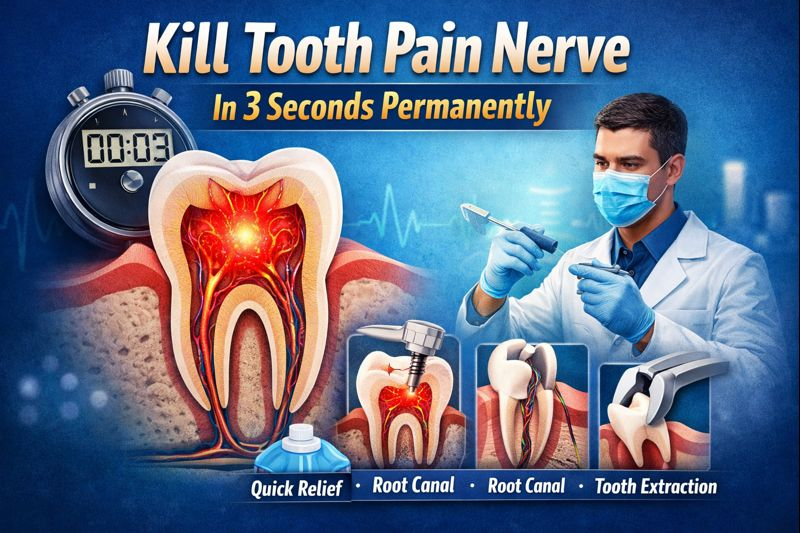
Tooth pain can be unbearable. When it strikes suddenly, many people search for instant fixes like “kill tooth pain nerve in 3 seconds permanently”. The idea of stopping severe toothache within seconds is tempting, especially at night or when dental care is not immediately available.
But here’s the truth: tooth nerve pain cannot be permanently killed in 3 seconds at home. However, there are ways to quickly numb the pain, reduce inflammation, and most importantly, treat the root cause permanently through proper dental procedures.
This article explains:
What tooth nerve pain actually is
How people try to kill nerve pain in tooth at home
What works temporarily vs what works permanently
Safe and effective dental treatments
When you should see a dentist immediately
What Causes Tooth Nerve Pain?
The nerve inside your tooth (called the pulp) is extremely sensitive. Pain occurs when this nerve gets irritated, inflamed, or infected.
Common causes include:
Deep tooth decay reaching the nerve
Cracked or fractured tooth
Exposed tooth roots due to gum recession
Dental abscess or infection
Failed fillings or crowns
Trauma or excessive pressure from grinding
When the nerve is exposed or infected, the pain can feel sharp, throbbing, shooting, or constant.
Can You Kill Tooth Pain Nerve in 3 Seconds Permanently?
No – permanent nerve death cannot happen instantly or safely at home.
What people usually experience as “instant relief” is actually:
Temporary numbing of the nerve
Reduced inflammation
Blocking pain signals for a short time
True permanent relief requires removal or treatment of the infected nerve, which can only be done by a dentist.
That said, let’s understand what options exist.
How to Kill Nerve Pain in Tooth Temporarily (Fast Relief)
These methods do not kill the nerve, but they may help calm the pain for a short duration.
1. Cold Compress
Applying ice externally on the cheek near the painful tooth can reduce inflammation and numb pain signals within minutes.
Best for:
Swelling
Acute pain after trauma
2. Salt Water Rinse
Warm salt water helps reduce bacteria and soothe inflamed tissues.
It does not kill the tooth nerve but can reduce pressure around it.
3. Clove Oil (Eugenol)
Clove oil contains a natural anesthetic compound.
How it helps:
Temporarily numbs the nerve
Reduces pain intensity
Use carefully and sparingly. Overuse can irritate gums.
4. Over-the-Counter Pain Relievers
Ibuprofen or paracetamol can help manage inflammation and pain.
Important:
Never place painkillers directly on the tooth or gums
Avoid exceeding recommended dosage
These methods are short-term measures, not permanent solutions.
Why Home Remedies Cannot Kill Tooth Nerve Pain Permanently
Many online sources suggest:
Aspirin on the tooth
Alcohol rinses
Hydrogen peroxide
Heat application
These methods are unsafe and ineffective. Some may even:
Burn gum tissue
Worsen infection
Delay proper treatment
Increase long-term damage
If the nerve is infected, pain may temporarily reduce as the nerve dies—but the infection remains and can spread to the jaw, face, or bloodstream.
How Dentists Kill Nerve Pain in Tooth Permanently (Safe & Effective)
Permanent relief means treating or removing the damaged nerve, not just numbing it.
1. Root Canal Treatment (Most Common Solution)
A root canal removes the infected nerve tissue and seals the tooth.
What it does:
Eliminates nerve pain completely
Preserves the natural tooth
Prevents infection spread
Modern root canals are:
Virtually painless
Completed in 1–2 sittings
Long-lasting when done properly
This is the gold standard when people search for how to kill tooth nerve pain permanently.
2. Tooth Extraction (When the Tooth Cannot Be Saved)
If the tooth is severely damaged:
The entire tooth (and nerve) is removed
Pain relief is immediate after healing
Extraction is followed by:
Dental implant
Bridge
Denture (depending on case)
3. Dental Filling or Crown (Early-Stage Pain)
If decay has not reached the nerve:
Filling or crown may seal the tooth
Prevent further nerve irritation
Early treatment can avoid nerve removal altogether.
Kill Nerve Pain in Tooth vs Treating the Cause
Approach
Relief Duration
Safety
Permanent
Home remedies
Minutes to hours
Limited
No
Painkillers
Few hours
Yes (short-term)
No
Root canal
Lifelong
Yes
Yes
Extraction
Permanent
Yes
Yes
When Tooth Nerve Pain Is a Dental Emergency
Seek immediate dental care if you experience:
Severe pain lasting more than 24 hours
Swelling in face or jaw
Fever with tooth pain
Pus discharge or bad taste
Pain that worsens at night
Delaying treatment can lead to abscess formation or systemic infection.
How to Prevent Tooth Nerve Pain in the Future
Prevention is always easier than cure.
Tips:
Brush twice daily with fluoride toothpaste
Floss once a day
Avoid excessive sugar intake
Do not ignore sensitivity or mild pain
Get dental check-ups every 6 months
Treat cavities early
FAQs
1. Is it really possible to kill tooth pain nerve instantly?
No. Instant relief usually means temporary numbing. Permanent nerve removal requires dental treatment like a root canal or extraction.
2. How to kill nerve pain in tooth at home safely?
You cannot kill the nerve at home. You can only reduce pain temporarily using cold compresses, salt water rinses, or clove oil until you see a dentist.
3. What happens if tooth nerve pain suddenly stops?
This may indicate nerve death due to infection. The pain stopping does not mean healing—the infection may still be active and dangerous.
4. How long does a root canal take to stop pain?
Pain relief often begins immediately after treatment, with full comfort within a few days.
5. Can antibiotics kill tooth nerve pain?
Antibiotics may reduce infection but do not eliminate nerve pain permanently unless combined with dental treatment.
Disclaimer
This article is for informational purposes only and does not replace professional medical or dental advice. Home remedies provide temporary relief and are not a substitute for dental treatment. Always consult a qualified dentist for diagnosis and proper management of tooth pain.