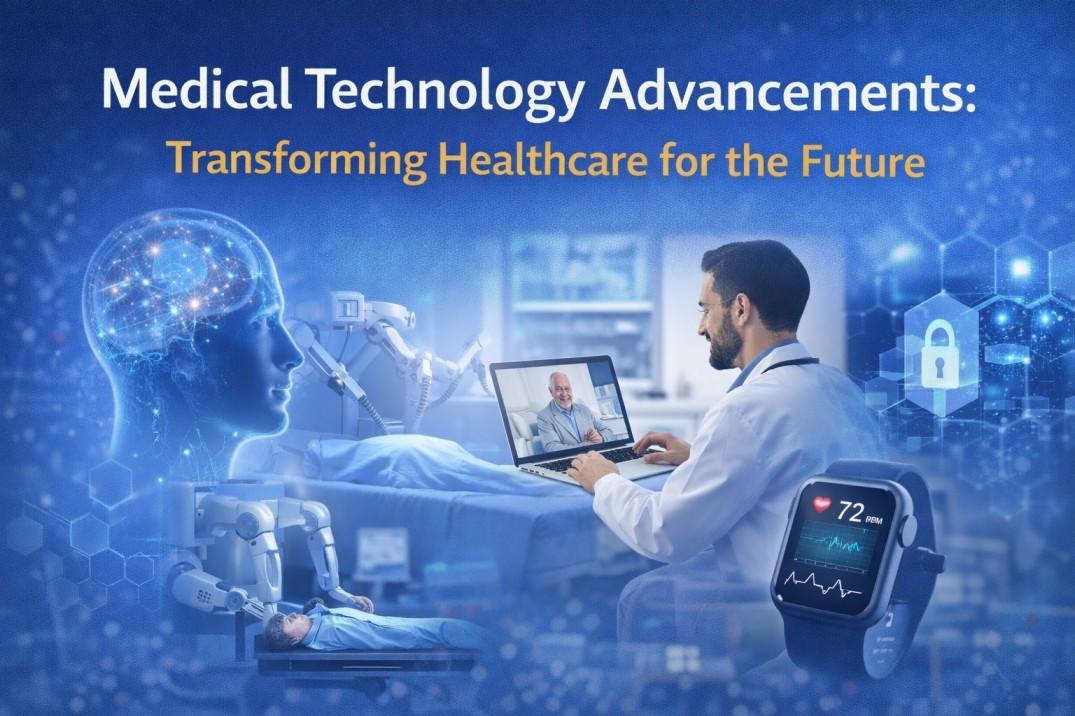
As healthcare continues to evolve, innovations in medical technology help redefine the way clinicians diagnose, treat and monitor patients. The ongoing penetration of new technologies and innovations has significantly improved the clinical results, but also accessibility to care, patients experience and operational effectiveness in all healthcare environments around the world. Providing an up-to-date, accessible resource for students and healthcare professionals, this full-colour guide covers the most crucial developments in medical technology using high quality photos and other images from authoritative sources.
Artificial Intelligence (AI) & Machine Learning in Healthcare
AI and machine learning powers medical advances in diagnostics, predictive analytics and personalisation She’s a radiologist working at the Center for Clinical Data Science (CCDS), an entrepreneurial venture of Massachusetts General Hospital and Harvard Medical School. AI algorithms are able to process large data sets – such as medical images and virtual training information – faster and more accurately than humans.
According to current independent research from academia, AI in clinical imaging can help increase the accuracy of diagnosis and reduce evaluation time, catch diseases such as cancer and cardiovascular disease earlier and improve care for the affected person. Doctors use the new abilities to make better, fact-driven choices, faster and more often.
Recent clinical developments include AI tools for diagnosis such as the smart stethoscope (from researchers at Imperial College London) which can identify some of the biggest heart conditions in seconds – something no human could match.
Key Impacts:
- Improved radiologic and pathologic pattern recognition
- Predictive analytics for patient outcomes
- Personalized treatment planning
- Increased diagnostic accuracy
Robotics and Automation in Surgery and Care
Robotic techniques have radically transformed surgery, due to a superior precision, versatility and control with respect to conventional operations. These same systems give surgeons the ability to perform intricate and challenging surgeries with little trauma to the patient leading faster recovery times and decreased complications.
Robotic tech also exists outside of the operating room. Advanced robotics such as rehabilitation, sterilization and even pharmacy automation help to strengthen care delivery.
Notable Developments:
Robotically Assisted Procedures, including but not limited to the da Vinci Surgical System
Remote tele-operations and telesurgery experiments with evidence of possible long-distance telementoring in the developing world.
Telemedicine and Remote Patient Monitoring
Telemedicine is increasingly seen as fundamental in telehealth, especially following the onset of COVID19. This builds a bridge between the company and the person concerned, saves money and makes care greener.
Outpatient monitoring structures – regularly supported by means of artificial intelligence – music essential signs and symptoms consisting of heart rate, blood pressure and glucose in real time. These structures allow doctors to intervene before serious events occur and help to provide higher patient outcomes and reduce hospital admissions.
Three virtual NHS wards in the UK are already deploying AI and wearables to provide in-clinic care at home, significantly reducing admissions for young people with complex problems.
Benefits Include:
- Remote access to clinical consultations
- Proactive management of chronic conditions
- Real-time health data
- Reduced healthcare costs
3D Printing and Bioprinting
Multimedia 3D printing The potential for custom implantsThe technology has found a role in medicine, with the creation of patient-specific models, personalized implants, and prosthetic prostheses customized to that individual’s anatomy and needs. Bioprinting has evolved and the construction of organs and tissues is suggested as a solution to organ shortage.
Medical 3D printing market is also estimated to reach billion dollar worldwide market and has high demand for customization, minimizing production times.
Key Applications:
- Custom prosthetics and implants
- Surgical planning models
- Tissue engineering and organ fabrication
Mobile Health (mHealth) and Wearable Technology
Sensors, smart watches and fitness bands are rewriting prevention and chronic care. Such devices track a patient’s physical condition, including heart rate, sleep and activity statistics on an ongoing basis, and provide esseuelly constant enhanced data information to the patient themselves and healthcare professionals.
Market research forecasts that the wearables market will grow significantly, testifying to its increasing presence in healthcare systems, particularly for monitoring and early detection of chronic diseases.
Advantages:
- Real-time health insights
- Blueprints for preventive care
- Compatibility with mobile and cloud health services
Blockchain and Its Use for Secure Health Data Applications
Healthcare data security and interoperability in an enhanced tamper-proof way Blockchain provides a potentially valuable service to provide patients with control over their electronic health records. Its decentralized nature diminishes chance of unauthorized participants and increases transparency in data sharing networks within healthcare.
Potential Benefits:
- Secure patient data sharing
- Enhanced interoperability
- Reduced fraud and errors
Digital health interventions and Health 2.0
Digital health interventions are a wide variety of technologies-including mobile apps, cloud-based platforms, telehealth tools and online patient portals-designed to enhance patient engagement, extend the reach of care and improve health outcomes.
Health 2.0 has also made patient empowerment a priority, combining cloud and mobile systems with social and community platforms to make it easier for the person in the street to access their own information about what is happening in their body, thus enabling peer support and involvement which are key determinants of success.
Healthcare Augmented and Virtual Reality
VR and AR in medical education, surgical training, and rehabilitation programs have been emerged as new strengths. VR environments may be used to simulate clinical situations as part of training, or assist the patient in returning from neurological and physical disorders through “experience focused” use.
Applications Include:
- Surgical preparation and simulation
- Patient rehabilitation
- Pain management and behavioral therapy
Impact on Developing Healthcare Systems
Developments in medical technology are changing the face of healthcare around the world, among other in low income countries. As technology is incorporated more and more, new avenues are developing to provide better diagnostics, access to care and workforce productivity – but challenges like infrastructure constraints and training obstacles still persist.
Challenges and Ethical Considerations
The promising medical technology progress also has its obstacles. Data privacy, cybersecurity, regulatory and algorithmic bias are challenges that need to be tackled for the safe and fair development of AI and digital health systems.
Conclusion
Advances in the clinical era are taking healthcare into a new era of precision, personalization and accessibility. From AI-powered diagnostics and robotic surgery to telemedicine and blockchain security, these upgrades are reshaping the way care is connected, experienced and managed. As these technologies mature, continued collaboration between researchers, practitioners, policymakers, and ERA developers may be necessary to maximize the blessings and minimize the threats.
Whether you’re looking for breakthroughs in patient care or fulfilling healthcare responsibilities like sales cycle control, it’s important to adopt holistic sources like scientific billing courses to ensure seamless integration of ERA into clinical and administrative workflows. The destiny of healthcare is not always just about innovation – it is about using generation responsibly to maximize the effect of exercise on one’s health.


Leave a Reply